
Introduction
You’ve switched to silicone cookware because it’s non‑stick, flexible, and heat‑resistant. But lately, you might have wondered: Is my silicone spatula secretly releasing toxins into my food?
The truth is, not all silicone is created equal. Low‑quality silicone can contain fillers (like calcium carbonate) or be cured with peroxides, which may leach chemicals when heated. The good news? You don’t need a lab. You can test your silicone cookware at home with these 7 simple methods.
⚠️ If your cookware fails any of the first three tests, stop using it with food immediately.
Test 1: The Smell Test (Even After Washing)
How to do it:
Wash your silicone product with mild dish soap and dry it completely. Then smell it closely – especially after heating it slightly (e.g., pour boiling water over it).
What’s safe:
No smell, or a very faint, neutral odor like clean stone or sand.
What’s toxic:
A strong plastic smell, burning rubber odor, or chemical scent (even after washing). This often means the silicone was cured with peroxides or mixed with non‑food‑grade polymers.
✅ Pass = odorless
❌ Fail = any chemical/plastic/rubber smell
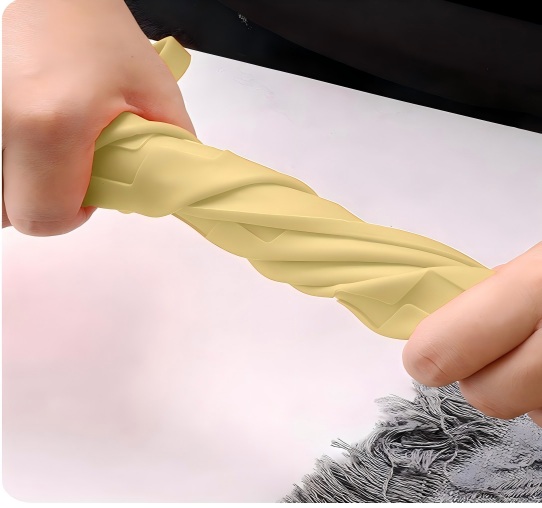
Test 2: The Twist & White Mark Test
How to do it:
Take a corner of the product and twist it tightly with your fingers. Hold for 5 seconds, then release.
What’s safe:
No white or gray marks appear. The material returns to its original shape immediately.
What’s toxic:
You see white stress marks or a cloudy grayish line along the twisted area. This is a sign of calcium carbonate or other fillers – cheap additives that can degrade under heat and may release unknown substances.
✅ Pass = no white marks
❌ Fail = white/gray marks appear
Test 3: The Boiling Water Test
How to do it:
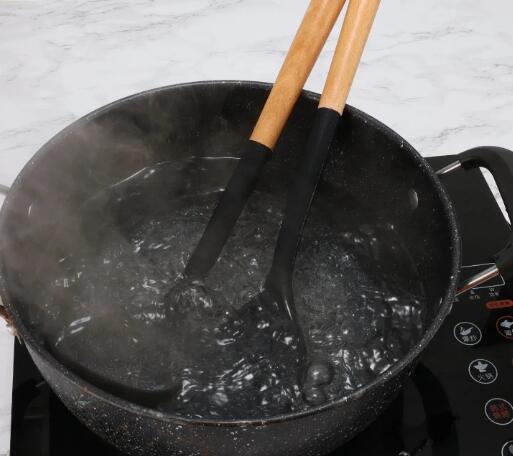
Place the silicone item in a pot of boiling water for 5 minutes. Observe the water and the product.
What’s safe:
The water stays clear. No oil film on the surface. The silicone feels the same – no stickiness, no weird smell.
What’s toxic:
-
An oily rainbow film floats on the water.
-
The water turns cloudy or smells bad.
-
The silicone becomes sticky or tacky after boiling.
These are signs of plasticizers, oils, or low‑grade fillers leaching out.
✅ Pass = clear water, no oil, no stickiness
❌ Fail = oil film, cloudiness, sticky surface
Test 4: The Oil Absorption Test
How to do it:
Drop a few drops of cooking oil onto the silicone surface. Spread it slightly with your finger, then wipe off.
What’s safe:
The oil beads up and does not soak in. After wiping, the surface feels dry.
What’s toxic:
The oil leaves a dark or wet stain, or the silicone absorbs it and looks permanently darker. This means the material is porous – likely mixed with latex or other absorbent fillers that can harbor bacteria and release chemicals when heated.
✅ Pass = oil beads & wipes clean
❌ Fail = oil soaks in or leaves stain

Test 5: The High‑Heat Check (Oven or Prolonged Heating)
How to do it:
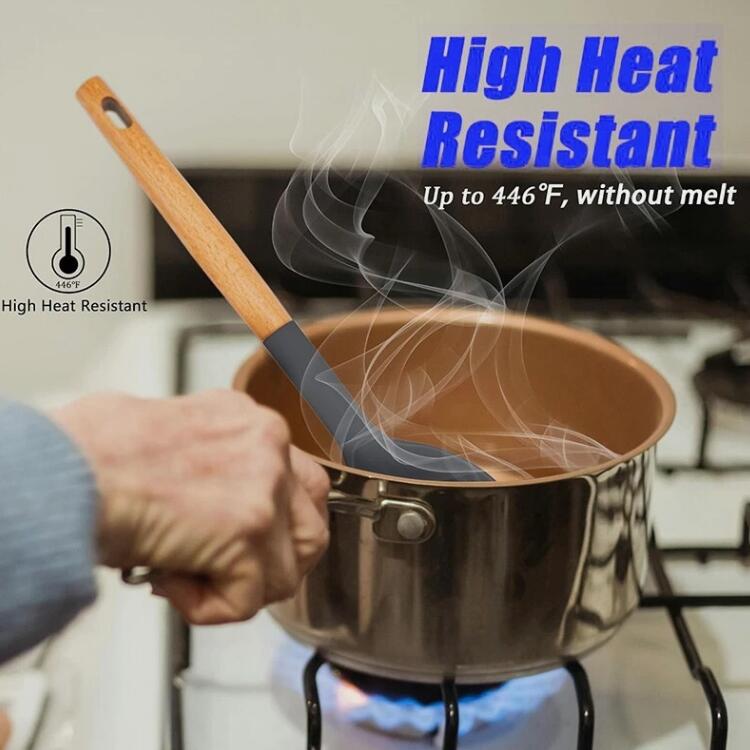
Check the product’s stated temperature rating (usually printed on packaging or the product). Then use it as intended – e.g., bake at 200°C (392°F) for 20 minutes. Alternatively, boil it for 10 minutes.
What’s safe:
No deformation, no melting, no sticky residue. The silicone remains firm and flexible.
What’s toxic:
The product becomes sticky, softens abnormally, releases a smell, or changes shape. This indicates the silicone cannot withstand normal cooking temperatures – a major safety risk.
✅ Pass = stable at 200‑230°C (392‑446°F)
❌ Fail = melts, deforms, or gets sticky
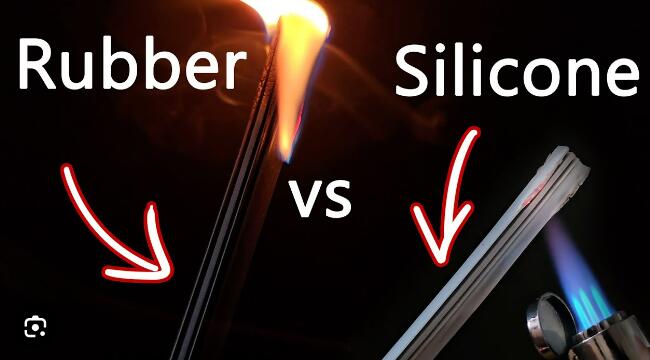
Test 6: The Burn Test (Do This Outdoors – Final Check)
⚠️ Only do this on a hidden spot or a broken piece you don’t mind destroying. Work in a well‑ventilated area away from flammable items.
How to do it:
Use tweezers to hold a small corner over a lighter flame for 5–8 seconds.
What’s safe:
-
Produces a light gray or white ash.
-
Does not catch fire (flame goes out when you remove the lighter).
-
Smells like sand or minerals.
What’s toxic:
-
Ignites and keeps burning.
-
Gives off thick, black, sooty smoke.
-
Drips burning plastic‑like liquid.
-
Smells like tar, rubber, or toxic chemicals.
❌ Do not use any product that fails this test – it is not food‑grade.
✅ Pass = white ash, no sustained flame
❌ Fail = black smoke, burning drips
Test 7: The Visual & Wear Check (Long‑Term Safety)
Even high‑quality silicone can degrade over time. Check your cookware regularly.
Signs it’s still safe:
-
Smooth, non‑sticky surface.
-
No cracks or deep scratches.
-
No white powder residue after washing.
Signs it may be toxic or unsafe:
-
Sticky or tacky surface (even after cleaning).
-
White powdery film that won’t wash off.
-
Cracks, holes, or melted spots.
-
Permanent oil stains or discoloration.
When to replace: If you see any of the unsafe signs, replace the item immediately. Quality silicone typically lasts 2‑4 years with normal use.
✅ Pass = smooth, clean, no stickiness
❌ Fail = sticky, powdery, cracked
Quick Summary Table (Cheat Sheet)
| Test | ✅ Safe | ❌ Toxic / Unsafe |
|---|---|---|
| Smell | Odorless | Plastic / rubber smell |
| Twist | No white marks | White / gray marks |
| Boil | Clear water, no oil | Oily film, sticky |
| Oil | Beads & wipes clean | Soaks in or stains |
| High‑heat | Stable at 230°C | Melts / sticky / deforms |
| Burn | White ash, no flame | Black smoke, drips |
| Visual | Smooth, clean | Sticky, powdery, cracked |
Common Misconceptions (For Factory Website – Help Your Customers)
1. “BPA‑free means safe.”
False. BPA is a plastic concern. Silicone can still contain other toxins like lead or phthalates if it’s low quality.
2. “Expensive silicone is always better.”
Not always, but extremely cheap silicone is almost certainly filled with extenders. Look for LFGB or FDA certification, not just price.
3. “If it doesn’t burn, it’s safe.”
The burn test is a good indicator, but it’s not the only one. Always combine with smell and boil tests.
4. “Dishwasher safe means it’s high quality.”
Not necessarily. Harsh detergents and high heat can degrade even good silicone faster. Hand washing is gentler.
As a silicone product manufacturer, we recommend always buying from suppliers who provide LFGB, FDA, or third‑party test reports. The tests above are for consumer reference – they are not a substitute for professional lab analysis, but they can save you from using dangerously low‑quality cookware.
If your silicone cookware passes all 7 tests, you can use it with confidence. If it fails even one of the first three (smell, twist, boil), replace it immediately. Your health is worth more than a cheap spatula.


